California Voters Reject Prop 39 Voter ID Amendment by Wide Margin
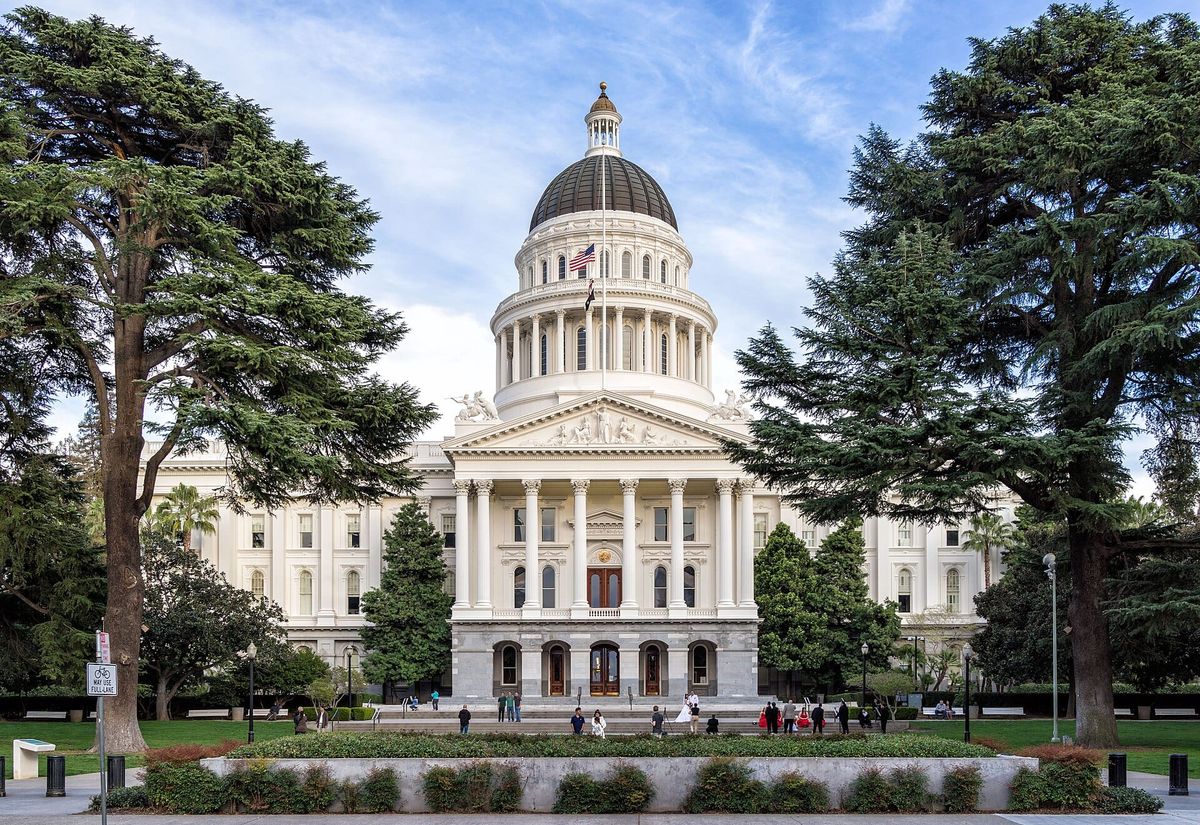
Election integrity will not be coming to California any time soon. Voters in the Golden State decisively rejected a constitutional amendment that would have required identification to vote, both in person and by mail.
Proposition 39 went down on Tuesday, with about 59% voting "No" and roughly 41% voting "Yes" in the latest count. The Associated Press called the race on election night, even as California kept counting millions of ballots.
Under the measure, Californians voting in person would have had to show government-issued ID before casting a ballot.
Mail voters would have had to write the last four digits of a government-issued ID number on their ballot envelopes, matching the information tied to their registration. The measure also would have required election officials to report each year on the share of registered voters whose citizenship had been verified.
READ MORE: Texas Governor-Elect Gina Hinojosa Won't Commit to Keeping Operation Lone Star
How California Checks Voters Now
Right now, California generally verifies voters through signatures instead of requiring ID every time someone votes. Prop 39's supporters wanted to add an ID check on top of that process, arguing it would make the system stronger and more trusted.
When registering, voters provide identifying information and swear under penalty of perjury that they are eligible. Election officials then compare the signatures on ballots against those in registration records. That system now stays in place.
Who Backed It, Who Fought It
Republican Assemblyman Carl DeMaio helped lead the campaign with Reform California after earlier efforts to pass voter ID through the legislature failed. The California Republican Party and the Howard Jarvis Taxpayers Association also supported it.
Backers argued that showing ID to vote is a simple safeguard already used in some form across much of the country. "Prop. 39 failed this year, but we are confident that commonsense voter ID is still in California's future," campaign spokesperson Meredith Shields said.
The opposition included the California Democratic Party, ACLU California Action, Common Cause and the League of Women Voters of California, along with Gov. Gavin Newsom, Sen. Adam Schiff and Gov.-elect Xavier Becerra.
"It was an absolutely unnecessary ballot measure," said David Trujillo, executive director of ACLU California Action. Opponents argued the rules could block eligible voters and said voter impersonation and noncitizen voting are rare. Supporters countered that ID rules deter illegal voting and boost confidence no matter how often fraud is documented.
READ MORE: Nancy Pelosi Says Democrats' Progressive and Mainstream Wings Differ Only on Timing
Big Money on Both Sides
The fight drew heavy national spending. Supporters raised about $37 million, according to CalMatters, including roughly $17 million from billionaire Richard Uihlein and about $8 million from Airbnb co-founder Joe Gebbia. Opponents raised about $35 million, including nearly $6.5 million from the California Democratic Party.
The nonpartisan Legislative Analyst's Office estimated the measure could have cost state and local governments anywhere from tens of millions to the low hundreds of millions of dollars a year.
California's result stood in sharp contrast to other states. Voters in Nevada, North Carolina and Ohio approved constitutional measures creating or expanding voter ID requirements, according to Ballotpedia, while Colorado voters rejected a separate ID proposal for mail ballots.
For California, it is another failed attempt by Republicans and election-integrity advocates to bring voter ID to one of the country's largest Democratic-run states.