Forensic Expert Says Epstein's Injuries Point to Homicide, Not Suicide
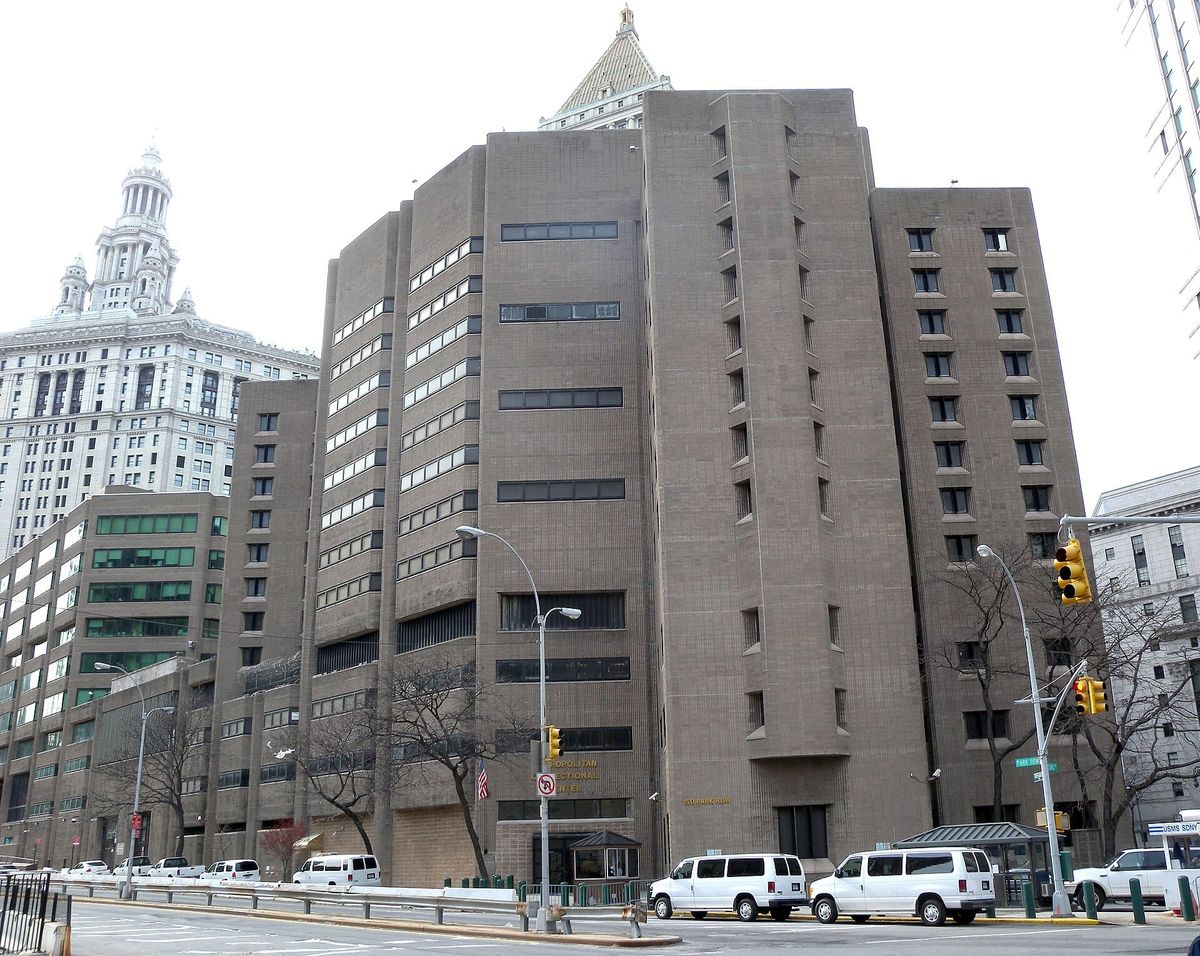
A forensic expert who spent about a year reviewing Jeffrey Epstein's autopsy records says the injuries on the financier's body point to homicide rather than suicide.
Dr. Michael Freeman, editor-in-chief of the Journal of Forensic and Legal Medicine, presented his findings Monday at Middle Temple, a legal society in London.
Epstein's complete autopsy file was provided to Freeman by Epstein's brother. According to CBS News, Freeman drew his conclusions from evidence that had not been publicly published.
“The injuries and the way the body was found don’t match up. There’s only one remaining explanation then, and that is that the death was as a result of a homicide,” Freeman said.
READ MORE: Massie Secures 218 Signatures to Force New House Vote on Epstein Files
Marks That Don't Fit a Hanging
Freeman pointed to what appeared to be fingernail marks above the ligature mark on Epstein's neck. He said those marks “would be consistent with strangulation, particularly from behind. And the attempt by the victim to try to remove the ligature from the neck,” according to the BBC.
He also cited a bruise near the base of the neck and a deep wound with fresh bleeding in Epstein's left shoulder muscle.
“The injury pattern was described as a sloped or as a peaked injury that was a perfect description for a hanging. But that’s not what we saw when we saw the photos,” Freeman said, noting a second, lower mark in the autopsy images that was never explained.
“There is no mechanism to produce a second mark that would be lower. Even if the ligature was tied with two loops, both loops would go up to the point where it was tied because that’s the anchor point,” he said.
“We have too many other injuries that are not explained by any suicidal hanging,” Freeman said. “How do you get the deep soft tissue hemorrhage in his left shoulder? How do you get the injury on his back?”
The Orange Fabric
Central to Freeman's theory is a piece of orange fabric found in the cell that was not reviewed by the medical examiner when the death was ruled a suicide.
READ MORE: Vance Admits Trump Administration Botched Epstein Files Messaging, Rejects Cover-Up Claims
“That is a double knotted, looped, narrow ligature that was found in the cell that was dropped in a corner near the desk,” he said. Freeman argued that pressure from one of its knots could explain an irregular abrasion at the back of Epstein's neck.
“And if you put it all together, it is most consistent with a homicidal strangulation from behind using a narrow knotted fabric ligature,” Freeman said.
Freeman acknowledged one alternative: that Epstein deliberately staged his death to look like a homicide. But he said the physical evidence more strongly supports an assault. “I cannot think of a scenario in which he could have caused the spectrum of injuries he has,” he told the BBC.
Medical Examiner Stands Firm
The New York City Office of Chief Medical Examiner continues to stand by its original finding that Epstein died by suicide. He was found dead in his Manhattan federal jail cell in August 2019, and multiple investigations have not produced evidence that another person caused his death.
Documents released in February showed that Dr. Kristin Roman, who examined Epstein's body, initially hesitated before reaching a final determination because of the case's prominence. “It was pretty clear cut,” she later told investigators.
Roman also acknowledged that she had not been permitted to inspect Epstein's cell or interview an employee involved in the case.