Strobe Talbott, Bill Clinton's Longtime Friend and Former Deputy Secretary of State, Dies at 80
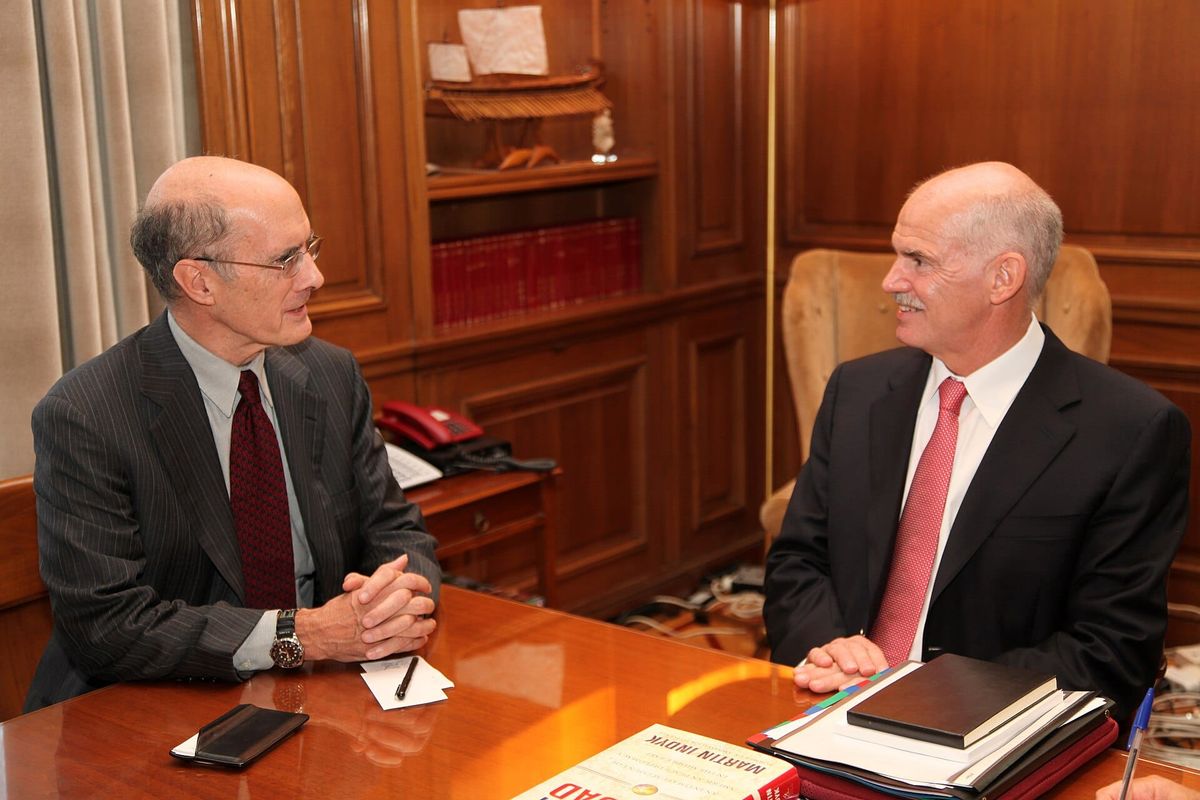
Strobe Talbott, Bill Clinton's longtime friend and former deputy secretary of state, died Thursday at 80 after a long illness.
His son Devin confirmed that Talbott died at his home in East Hampton, New York.
Talbott's connection to Clinton began when both were Rhodes scholars at Oxford, and the friendship eventually placed him near the center of American foreign policy during Clinton's presidency. The connection continued after Oxford, with Clinton staying at the Talbott home during visits to Washington.
From Oxford to the State Department
After taking office in 1993, Clinton recruited Talbott to help shape policy toward Russia and the former Soviet republics. He first served as a special adviser before becoming deputy secretary of state from 1994 to 2001, second-in-command under Warren Christopher and Madeleine Albright.
READ MORE: New York State Senate Majority Leader Andrea Stewart-Cousins Dies at 76
His responsibilities included arms control, NATO expansion, Balkan conflicts and the administration's relationship with Russian President Boris Yeltsin.
Clinton sometimes called him daily, including late-night conversations about international affairs. Years earlier at Oxford, Clinton would bring scrambled eggs and tea while Talbott worked overnight translating Nikita Khrushchev's memoirs.
Talbott recalled that his children knew Clinton as the visitor who ate their ice cream. He later acknowledged that perceptions of his influence sometimes exceeded reality, and admitted he had little incentive to correct that impression because it increased his power.
A Career at Time
Talbott entered government after spending 21 years at Time as a correspondent, bureau chief and columnist. His 1984 book "Deadly Gambits" criticized the Reagan administration's handling of arms control, and Democratic nominee Walter Mondale quoted from it during a debate with Reagan, who nevertheless won reelection overwhelmingly.
He also criticized Reagan's confrontational language toward the Soviet Union, describing it as bear-baiting. After the Soviet collapse, he acknowledged that he had never expected to outlive the Soviet state.
Russia Policy and Its Critics
In the Clinton administration, he supported American engagement with Russia and assistance intended to encourage democratic and economic reforms. Critics argued that his affection for Russian language and culture contributed to an overly optimistic understanding of its politics.
READ MORE: Melania Trump Helps Reunite Nine More Children With Families Amid Russia-Ukraine War
Talbott maintained that Washington had to deal with Moscow because of the dangers posed by its nuclear arsenal.
His work included efforts to move nuclear weapons from Ukraine, Belarus and Kazakhstan to Russia, as well as Russian troop withdrawals from the Baltic states. He also worked on negotiations involving conflicts in the former Yugoslavia, and his position on NATO expansion evolved from early warnings about antagonizing Moscow to support for the administration's policy. Not every position he advocated prevailed, as Clinton declined to sign the 1997 treaty banning antipersonnel land mines.
After government, he launched Yale's Center for the Study of Globalization and then led the Brookings Institution for 15 years, retiring in 2017 after overseeing a fundraising campaign exceeding $650 million.
Born Nelson Strobridge Talbott III in Dayton, Ohio, on April 25, 1946, he graduated from Yale in 1968 before continuing his studies at Oxford. His work translating Khrushchev's secret memoirs drew hostility from Soviet officials, who barred him from Russia for five years.
His first wife, Brooke Shearer, died of cancer in 2009, The Washington Post reported. He married writer and lawyer Barbara Lazear Ascher in 2015.