Supreme Court Declines To Hear Challenge To Maryland's 'Sensitive Places' Gun Restrictions
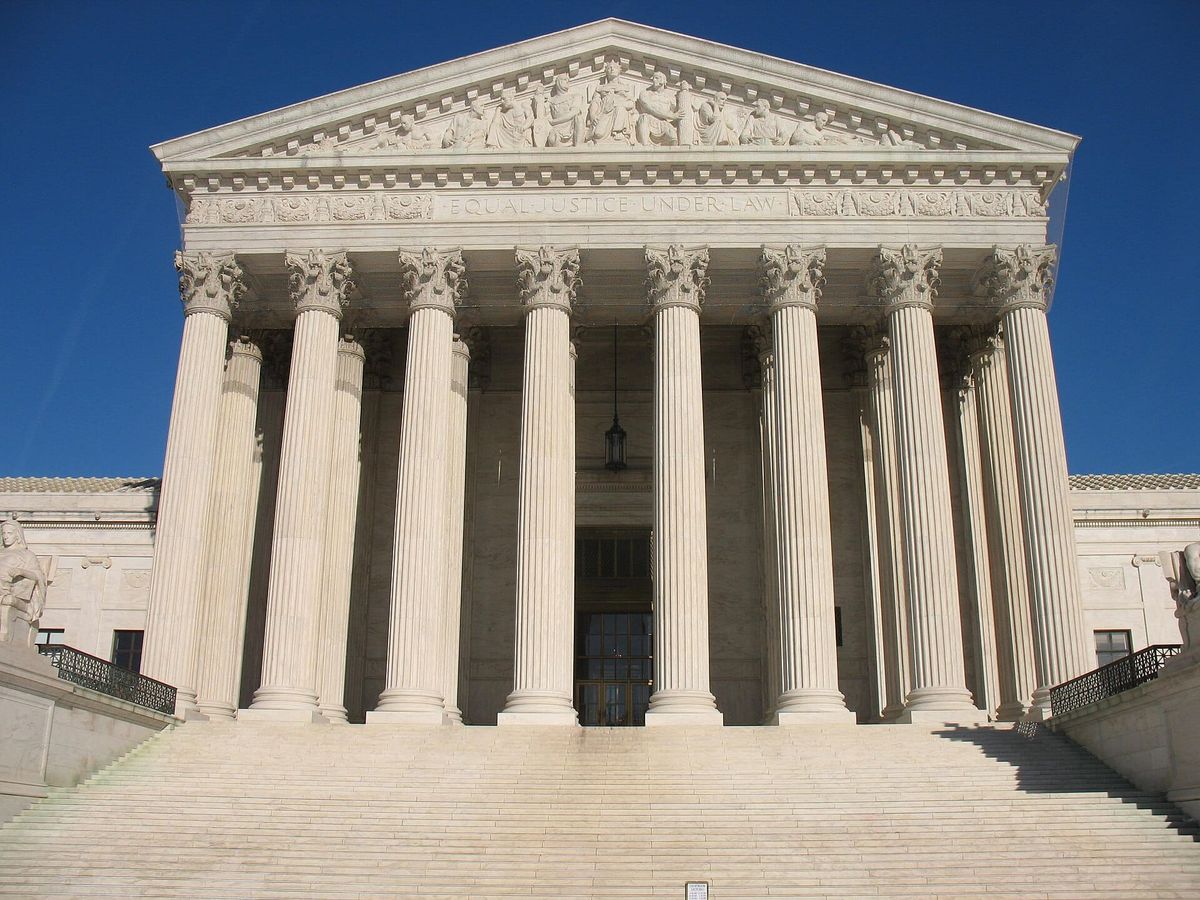
The Supreme Court declined on Monday to hear a Second Amendment challenge to Maryland restrictions that ban firearms in numerous locations the state has designated as "sensitive places."
The justices rejected the appeal in Novotny v. Moore, leaving intact a lower-court ruling that upheld restrictions covering public transit, parks, healthcare facilities, entertainment venues and places serving alcohol.
The decision is not a ruling on whether Maryland's restrictions are constitutional. The justices simply declined to review the case, which allows the Fourth Circuit Court of Appeals decision to remain in effect.
Thomas Signals Serious Doubts
Justice Clarence Thomas issued a separate statement agreeing that the court should not take this particular case, while signaling significant concerns about how broad Maryland's restrictions are.
READ MORE: Lead Plaintiff Asks To Withdraw From Supreme Court Challenge To Maryland's 'Assault Weapon' Ban
"I am skeptical that each of these laws 'is consistent with this Nation's historical tradition of firearm regulation' in 'sensitive places,'" Thomas wrote.
Thomas said the sweeping nature of the challenge made the case poorly suited for Supreme Court review, because Maryland's individual restrictions potentially implicate different historical traditions.
"I harbor serious doubts that our Nation's historical tradition of firearm regulation supports many of these sweeping restrictions," Thomas wrote. "In an appropriate case, this Court should consider whether particular sensitive-place laws are consistent with the right to public carry."
Maryland Expanded Its Restrictions After Bruen
Maryland prohibits firearms at public demonstrations, on mass transit, at healthcare facilities, at amusement venues and at businesses serving alcohol for on-site consumption. The restrictions also cover tens of thousands of acres of state parks and forests.
Some of those rules predate the current fight, while others were enacted after the Supreme Court's landmark 2022 decision in New York State Rifle & Pistol Association v. Bruen.
In Bruen, the court held that the Second Amendment protects an individual's right to carry a handgun in public for self-defense. The ruling also required governments defending gun regulations to show that they are consistent with the nation's historical tradition of firearm regulation.
READ MORE: Massie Secures 218 Signatures to Force New House Vote on Epstein Files
Maryland responded in 2023 by expanding the list of places where firearms could not be carried. Gun-rights organizations and Maryland residents challenged multiple provisions shortly after Democratic Gov. Wes Moore signed them into law.
The Fourth Circuit upheld the challenged restrictions, concluding that the locations could constitutionally be treated as sensitive places. The challengers then asked the Supreme Court to step in.
Gun-Rights Group Disappointed
The Second Amendment Foundation, one of the organizations involved in the litigation, expressed disappointment after Monday's decision. The group argued that Maryland had gone too far by creating numerous categories of locations where otherwise lawful gun owners cannot carry firearms.
Thomas' statement, however, leaves open the possibility that the court could eventually revisit similar restrictions through a narrower challenge targeting a particular category of sensitive location.
The decision comes during another consequential period for Second Amendment cases. The justices are preparing to hear arguments on Dec. 2 involving state restrictions on AR-15s and other semiautomatic firearms.
The court recently struck down broad restrictions in Hawaii governing firearm possession on private property open to the public. It has separately upheld a federal law barring gun possession by people subject to certain domestic-violence restraining orders. For now, Monday's action means Maryland's sensitive-place restrictions remain enforceable.