Supreme Court Delivers Huge Decision 19 Days Before Midterms
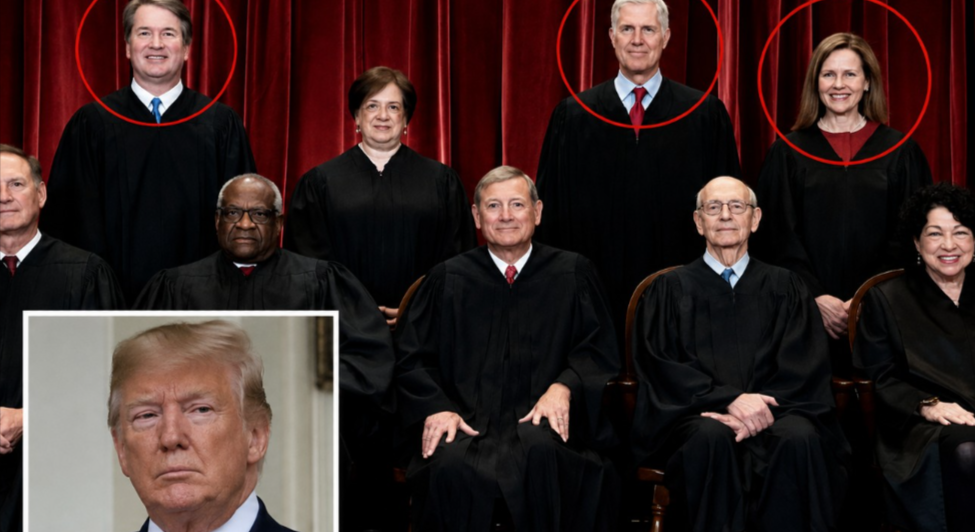
The Supreme Court declined Monday to hear former National Labor Relations Board member Gwynne Wilcox’s challenge to President Donald Trump’s decision to remove her, leaving in place a lower court ruling that upheld the firing. The justices did not issue a new ruling on the constitutional questions behind her case.
Wilcox, whom former President Joe Biden appointed to a second five-year term in 2023, argued that federal law protected her from removal without cause. Trump fired her shortly after returning to the White House in January 2025.
A federal district judge initially ruled in Wilcox’s favor, but a divided federal appeals court reversed that decision in December 2025. The Supreme Court’s refusal to review the case leaves the appeals court’s judgment undisturbed. The justices did not explain why they denied the appeal.
The decision comes after the Supreme Court’s June ruling upholding Trump’s removal of Federal Trade Commission member Rebecca Slaughter. That ruling rejected the 1935 precedent in Humphrey’s Executor, which had allowed Congress to protect certain independent agency officials from removal. The Court’s recent decisions have strengthened presidential authority over executive branch officials, a shift supporters say makes agency leadership more accountable to an elected president.
Critics warn that broader removal power could weaken regulatory independence. Wilcox expressed disappointment with the outcome, citing workers and employers who rely on impartial resolution of labor disputes.
The NLRB dispute could have implications for a separate case involving the National Credit Union Administration. Former NCUA board members Todd Harper and Tanya Otsuka are challenging Trump’s April 2025 decision to remove them. Their appeal, Harper v. Bessent, remains pending before the D.C. Circuit.
The NCUA supervises federally insured credit unions, administers the National Credit Union Share Insurance Fund, examines institutions and enforces regulations. Harper and Otsuka argue that the agency’s financial oversight role makes it more like the Federal Reserve, whose structure has been treated as distinct in disputes over presidential removal authority.
The administration argues that the Constitution permits the president to remove NCUA board members. Federal law establishes a three-member board with staggered terms and limits on partisan representation, but the NCUA statute does not expressly provide the same removal protections at issue in Wilcox’s case.
A district judge ordered Harper and Otsuka reinstated. The appeals court later stayed that order, keeping them off the board while the case proceeds. The dispute has also raised practical concerns about agency operations: credit union representatives have emphasized the importance of a functioning, bipartisan board for effective supervision and institutional stability.
Monday’s Supreme Court action did not decide whether Trump lawfully removed Harper and Otsuka, and it did not order them reinstated. That question remains for the appeals court, which will have to weigh the statutory language, constitutional precedent and the NCUA’s financial responsibilities.
The cases reflect a broader dispute over the separation of powers. Presidents nominate agency leaders, while Congress has at times limited presidential removal authority to promote regulatory independence. Recent Supreme Court decisions have shifted that balance, but the Wilcox denial leaves the separate NCUA dispute unresolved.
For now, the administration’s position has prevailed in Wilcox’s case, while the ultimate reach of presidential removal authority over financial regulators awaits further court review.