Supreme Court Hands Republicans Major Victory In Alabama Redistricting Battle
Republicans secured another significant legal victory at the U.S. Supreme Court this week as the high court cleared the way for Alabama to advance a new congressional redistricting effort ahead of the critical 2026 midterm elections.
In a 6-3 ruling issued Monday, the Supreme Court overturned a lower court decision that had forced Alabama to maintain two majority-Black congressional districts, a requirement state Republicans argued improperly elevated race above constitutional principles and state authority.
The decision immediately energized Republican officials in Alabama, who signaled they are prepared to move quickly to redraw congressional boundaries in a way that could strengthen GOP control in districts currently held by Democrats.
At the same time, Democrats are openly discussing aggressive legal and political strategies aimed at blocking Republican gains before voters head to the polls in November.
But GOP lawmakers appear confident the legal momentum is now on their side.
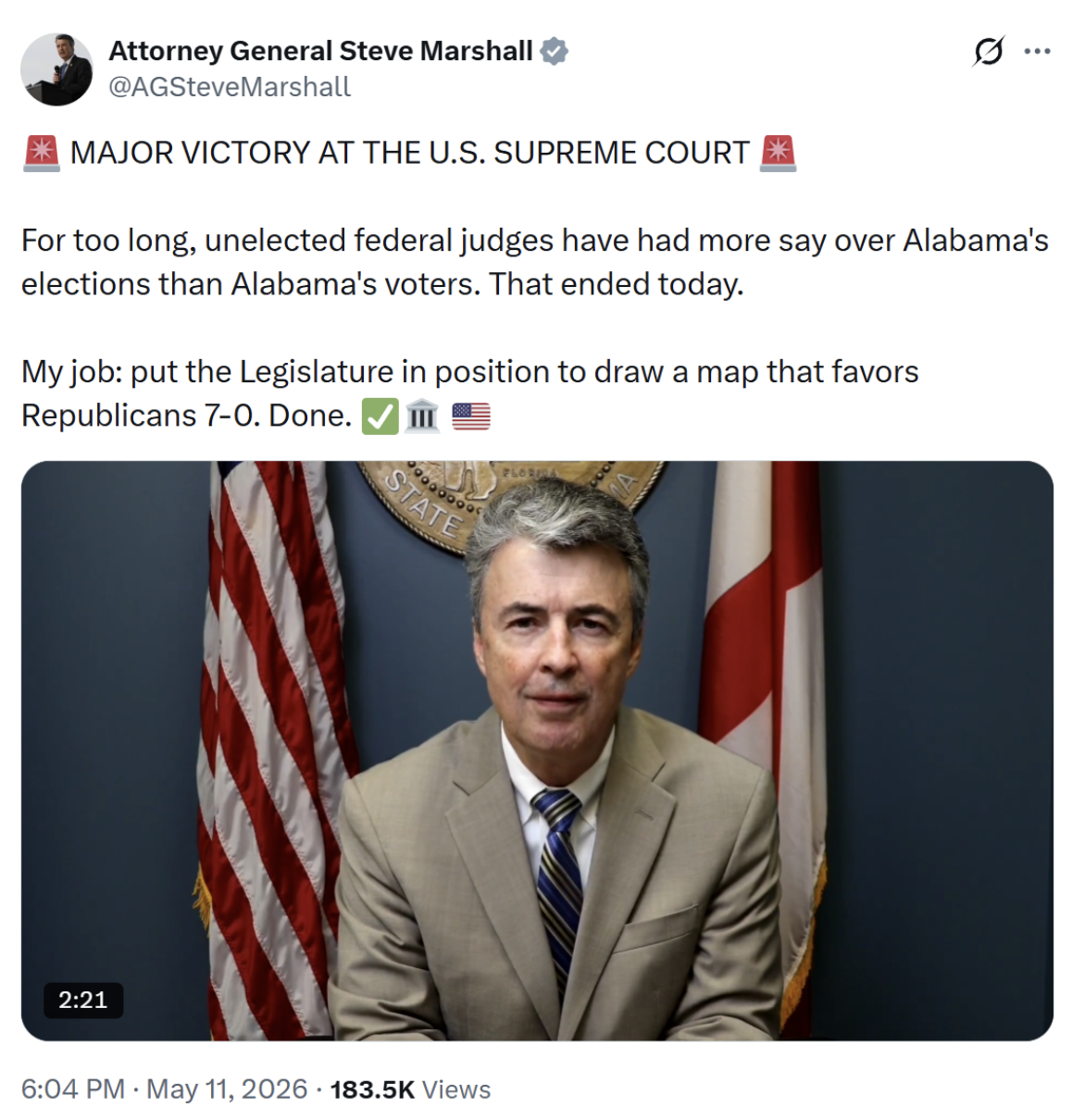
Alabama Attorney General Steve Marshall celebrated the ruling in a post on X, writing, “For too long, unelected federal judges have had more say over Alabama’s elections than Alabama’s voters. That ended today. My job: put the Legislature in position to draw a map that favors Republicans 7-0. Done.”
Here’s what’s expected next as lawmakers prepare for the upcoming election cycle:
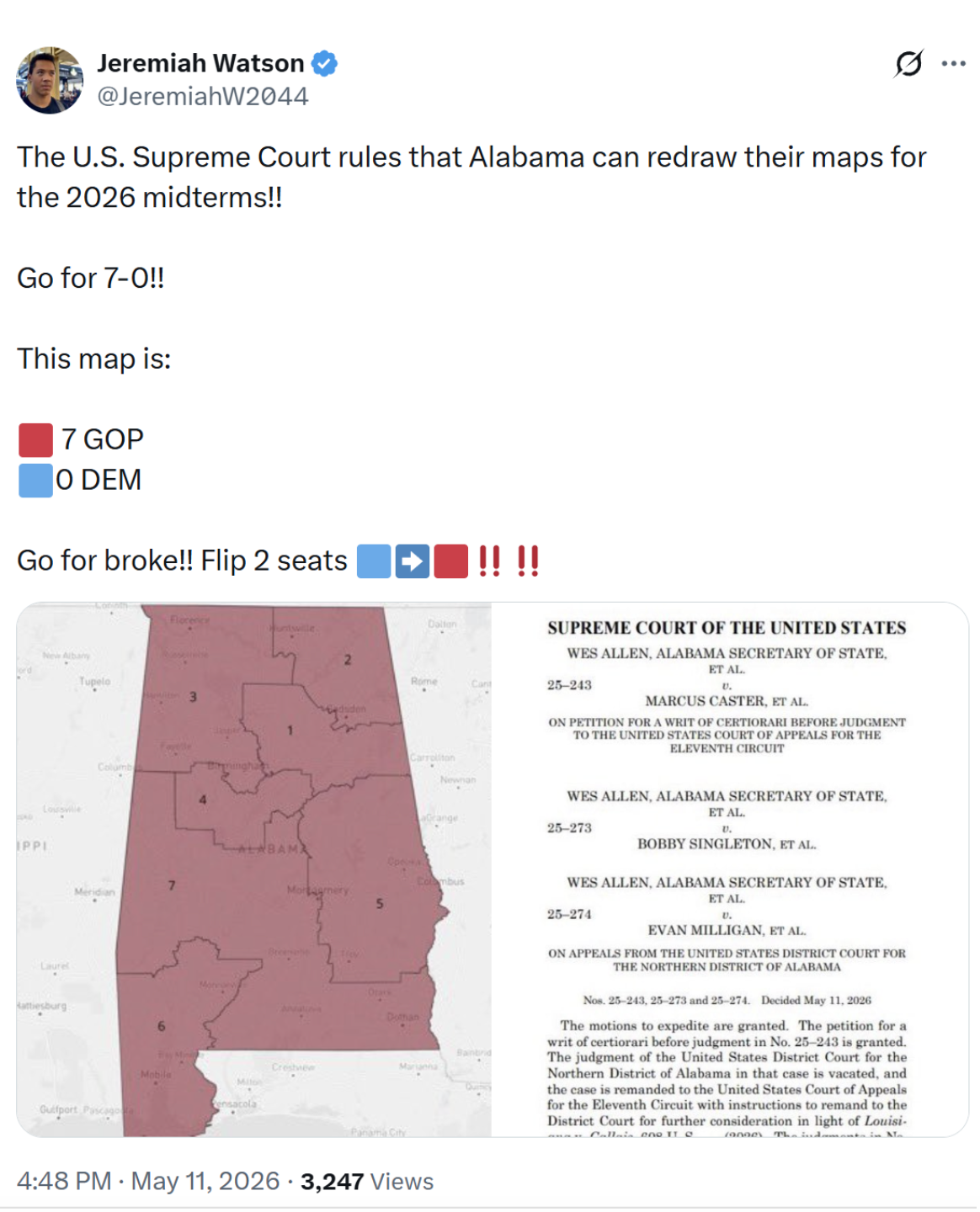
The Supreme Court’s decision comes shortly after its ruling in Louisiana v. Callais, where the justices sharply limited the use of race in congressional mapmaking and struck down Louisiana’s congressional map as an unconstitutional racial gerrymander.
Conservative legal observers have argued the recent decisions reinforce the principle that race cannot become the dominant factor in drawing congressional districts, even under interpretations of the Voting Rights Act.
The court’s liberal bloc predictably dissented in the Alabama case. Justices Sonia Sotomayor, Elena Kagan, and Ketanji Brown Jackson opposed the majority opinion, according to multiple reports.
The Supreme Court instructed the lower court to revisit Alabama’s case in light of the Callais ruling, signaling that previous legal standards surrounding minority-majority districts may no longer apply in the same way.
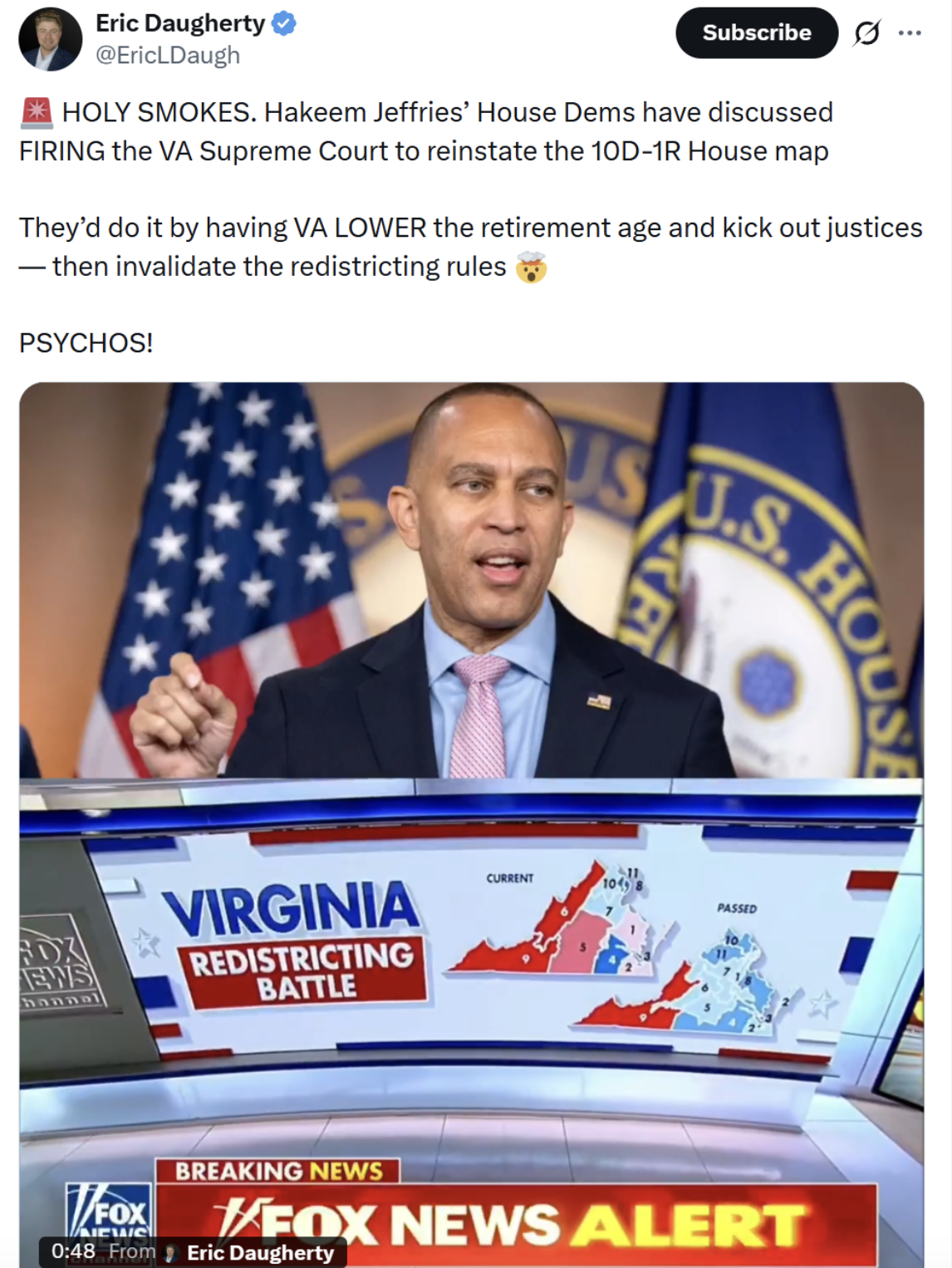
Meanwhile, Democrats are escalating warnings about Republican-led redistricting efforts nationwide and have already announced plans to challenge the GOP’s strategy before the midterms.
Republican Gov. Kay Ivey stated last week that Alabama officials were “ready to quickly act” if the courts issued favorable rulings that would allow new maps to move forward.
State officials are now expected to restore congressional district maps passed by the Legislature in 2023, along with state Senate district boundaries approved in 2021.
Alabama’s May 19 primary election is still expected to proceed as scheduled. However, under a recently signed law, Gov. Ivey has the authority to call special elections in districts impacted by any new redistricting changes after the primary concludes.
Alabama is only one front in a rapidly expanding nationwide battle over congressional maps before the midterms.
Republicans have steadily gained momentum in redistricting fights across several key states, with the GOP positioned to potentially gain additional House seats through map changes in Texas, Missouri, North Carolina, Ohio, Florida, and Tennessee.
Last week, the Supreme Court also allowed its major ruling against Louisiana’s congressional map to take effect immediately, triggering a sharp disagreement among the justices.
The voters who challenged Louisiana’s map urged the court to fast-track the normal 32-day waiting period between a Supreme Court ruling and its return to a lower court.
The challengers argued that “time is … of the essence” with election deadlines approaching and requested that lower courts begin overseeing revisions to Louisiana’s maps immediately.
The Supreme Court granted the request, explaining that the normal 32-day delay is “subject to adjustment” when circumstances require quicker action.
Justice Ketanji Brown Jackson strongly objected to the decision, calling the 8-1 ruling “unwarranted and unwise.”
Jackson argued that the Supreme Court should “stay on the sidelines” in order to “avoid the appearance of partiality,” citing the court’s traditional hesitation to intervene close to elections.
“And just like that, those principles give way to power,” she wrote.
However, critics noted that Louisiana’s existing congressional maps had already been ruled unconstitutional, making continued enforcement legally difficult to justify.
Justice Samuel Alito forcefully defended the majority’s decision in a concurrence joined by fellow conservative Justices Clarence Thomas and Neil Gorsuch, underscoring the court’s growing willingness to rein in race-based redistricting practices.