Supreme Court Lets Trump Resume Border Barrier Construction in Texas' Big Bend Region
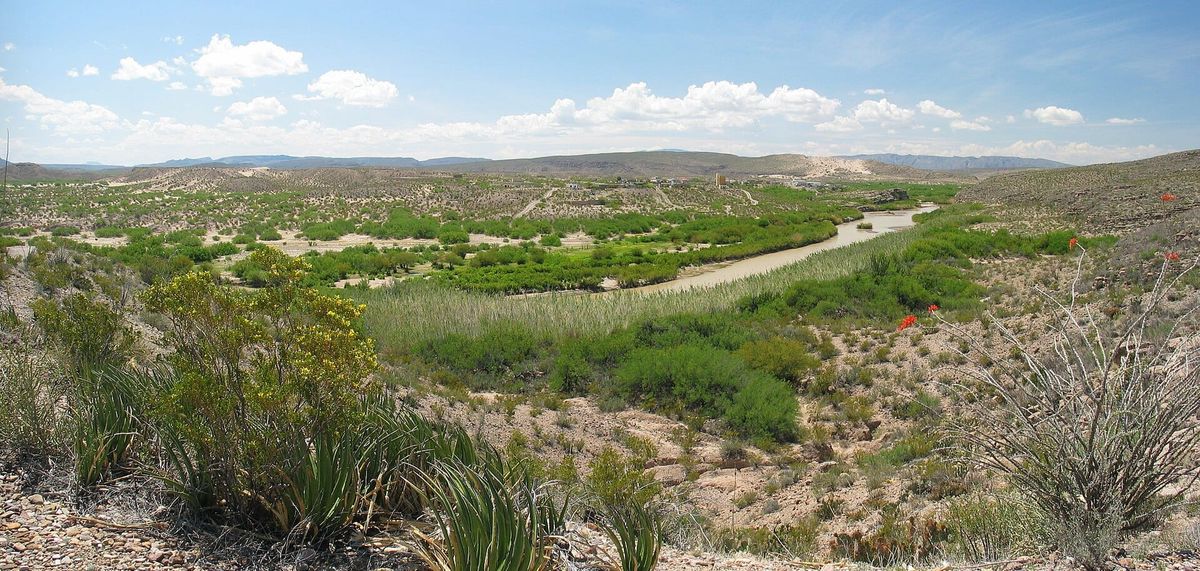
The Supreme Court handed President Donald Trump a major border-security win Monday, allowing his administration to restart construction of barriers and related infrastructure in Texas' Big Bend region.
In an unsigned 8-1 decision in Mullin v. Friends of the Ruidosa Church, the justices paused an injunction from U.S. District Judge Kathleen Cardone, a George W. Bush appointee, that had stopped construction while opponents challenged the administration's power to bypass environmental and conservation laws.
Cardone had questioned whether Congress clearly allowed the government to waive a long list of environmental rules in an area that accounts for a relatively small share of illegal border apprehensions.
The challengers built their case around the major questions doctrine, but the justices rejected that approach. "There is no such thing as a 'constitutional' major-questions claim," the Court wrote, explaining that the doctrine is a rule for reading statutes and that the claim "alleges instead that the Secretary exceeded his statutory authority."
READ MORE: Supreme Court Signals It May Limit Inmate Lawsuits Against Federal Prison Officials
Justice Ketanji Brown Jackson, a Joe Biden appointee, was the only justice to publicly dissent. She said she would have denied the emergency application but did not write a separate explanation.
What the Law Allows
The ruling means construction can move forward while the administration seeks further Supreme Court review of the underlying lawsuit.
The fight centers on Section 102 of the Illegal Immigration Reform and Immigrant Responsibility Act of 1996, which lets the homeland security secretary build barriers and roads in areas of high illegal entry. Congress later expanded the law to allow the secretary "to waive all legal requirements" needed for the "expeditious construction" of barriers, while sharply limiting court challenges to those waivers.
"Congress's enactment of Section 102 — which permits the Secretary to waive the requirements of environmental-protection and other conservation laws — reflects a clear preference for expeditious border construction over the very harms respondents assert," the Court wrote.
The justices also rejected the argument that the government had to prove illegal entries in Big Bend were high compared with other parts of the southern border. "There is no such thing as 'comparative high illegal entry' in the statute," the Court said.
A Fight Over a Remote Stretch
The Big Bend Sector runs about 517 miles along the U.S.-Mexico border, making it one of the largest Border Patrol sectors by area. Earlier this year, the Department of Homeland Security used its waiver authority to speed up construction there.
READ MORE: TEXAS ELECTS DEMOCRAT GOVERNOR – HER ANNOUNCEMENT ON THE BORDER IS HORRIFYING
The project drew several lawsuits from environmental groups, local residents and others worried about wildlife, public lands, tourism and the Rio Grande. Friends of the Ruidosa Church, the Center for Biological Diversity and local river guide Danny William Miller Jr. were among the plaintiffs.
Solicitor General D. John Sauer argued that Cardone's order interfered with the executive branch's ability to secure the border and ignored the limits Congress placed on judicial review. The justices agreed, saying the halt "impedes the Government from advancing its 'compelling interests' in border security and integrity."
"The Government's interest therefore outweighs any aesthetic, recreational, and environmental harm alleged by respondents," the Court concluded.
Opponents blasted the decision. "This horrific decision clears the way for contractors to bulldoze pristine desert and dynamite canyon walls before the courts have even decided whether this destruction is legal," said Laiken Jordahl of the Center for Biological Diversity.
The administration says illegal crossings and drug trafficking in the region justify more barriers, roads and surveillance, and warns that gaps could push smugglers and cartels toward Big Bend. Customs and Border Protection has said it no longer plans a 30-foot pedestrian wall inside Big Bend National Park itself, though roads, vehicle barriers and surveillance equipment are still planned there.