EPA Reports Zero Airborne Lead Detected After Army Detonates Unstable Explosives in Iowa
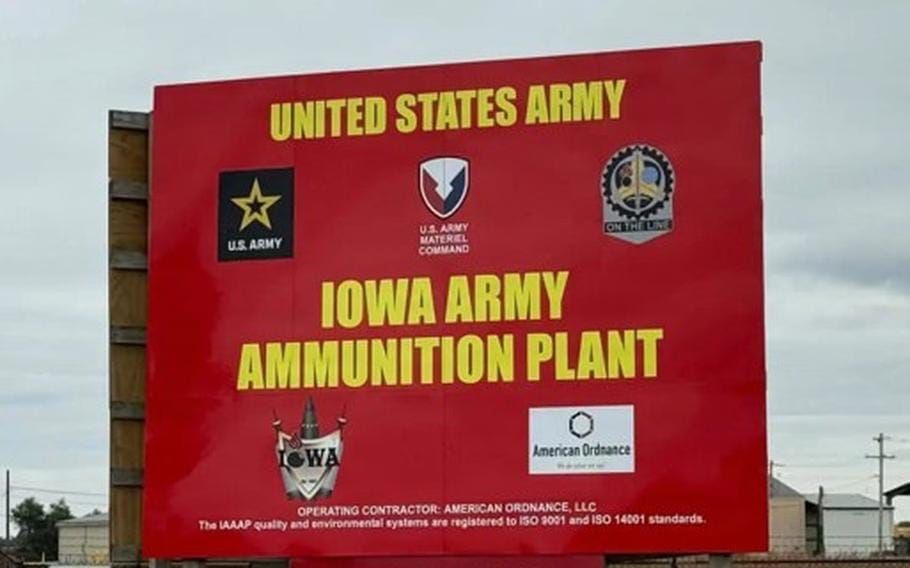
Officials reported encouraging early results Thursday after the U.S. Army detonated nearly five tons of unstable explosives at the Iowa Army Ammunition Plant in Middletown, with monitors detecting no airborne lead in surrounding communities.
The Environmental Protection Agency confirmed that its real-time monitoring equipment registered zero detectable airborne lead following Wednesday's controlled explosions.
"All real-time Xact air monitors continue to report, as they have since detonation, zero detection of airborne lead throughout the region," the agency announced.
9,700 Pounds Destroyed
The operation destroyed 68 barrels containing approximately 9,700 pounds of deteriorating lead azide, a highly sensitive explosive used in military detonators and ammunition.
The Army carried out two simultaneous detonations at about 9 a.m. Central Time Wednesday, after days of public concern, legal challenges and extensive preparations.
Officials had discovered months earlier that the lead azide had deteriorated and crystallized, making it extremely sensitive to friction and vibration. Experts warned that moving the barrels could trigger an uncontrolled explosion. The Army determined that destroying the material in place was safer than attempting to transport or chemically neutralize it.
Military engineers built large sand barriers, water walls, foam barriers and gel blocks around the stockpile. ATF Director Robert Cekada said the blast followed a specially designed channel intended to direct its force downward.
'Exceeded Expectations'
Maj. Gen. Eric Shirley, commanding general of the U.S. Army Sustainment Command, said the results "exceeded expectations."
"Every indication is that all of the munitions that were employed absolutely reduced the lead azide threat," Shirley said.
Missouri Gov. Mike Kehoe also said preliminary information suggested the protective measures worked. "Initial analysis shared with us by federal partners and Iowa Homeland Security and Emergency Management indicates that the mitigation measures appear to have been successful and the explosion was well-contained," he said.
READ MORE: Trump Pardons Thanksgiving Turkeys, Calls on Americans to Be 'United in Gratitude'
More Testing Underway
Officials stressed that laboratory testing is still underway to determine whether hazardous materials settled on surfaces or entered water supplies. The EPA collected 1,591 air, water, soil and dust samples before the explosions and more than 1,000 afterward, with results expected as early as Friday.
About 300 EPA employees and contractors were deployed to test locations including schools, playgrounds, daycare centers, churches and homes. EPA officials are also examining samples for volatile organic compounds and particulate matter to determine whether substances other than lead were released.
Federal authorities had recommended that some nearby residents evacuate before the explosions, particularly pregnant women, young children and people with chronic health conditions. Iowa Gov. Kim Reynolds also issued an emergency proclamation to support response preparations.
The Iowa Environmental Council and the Sierra Club's Iowa chapter had sought emergency court action to block the operation, but the 8th U.S. Circuit Court of Appeals rejected the challenge Monday. The Army's projections had identified a possible dust-deposition area covering approximately 148 square miles outside the installation. President Donald Trump supported eliminating the deteriorating stockpile while acknowledging concerns surrounding the operation.
Iowa Gov.-elect Rob Sand called for transparency. "Iowans across the state are understandably alarmed and scared," Sand said. "There must be immediate transparency to understand how and why this situation became what it did."