SpaceX Catches Starship Spacecraft With Launch Tower for the First Time
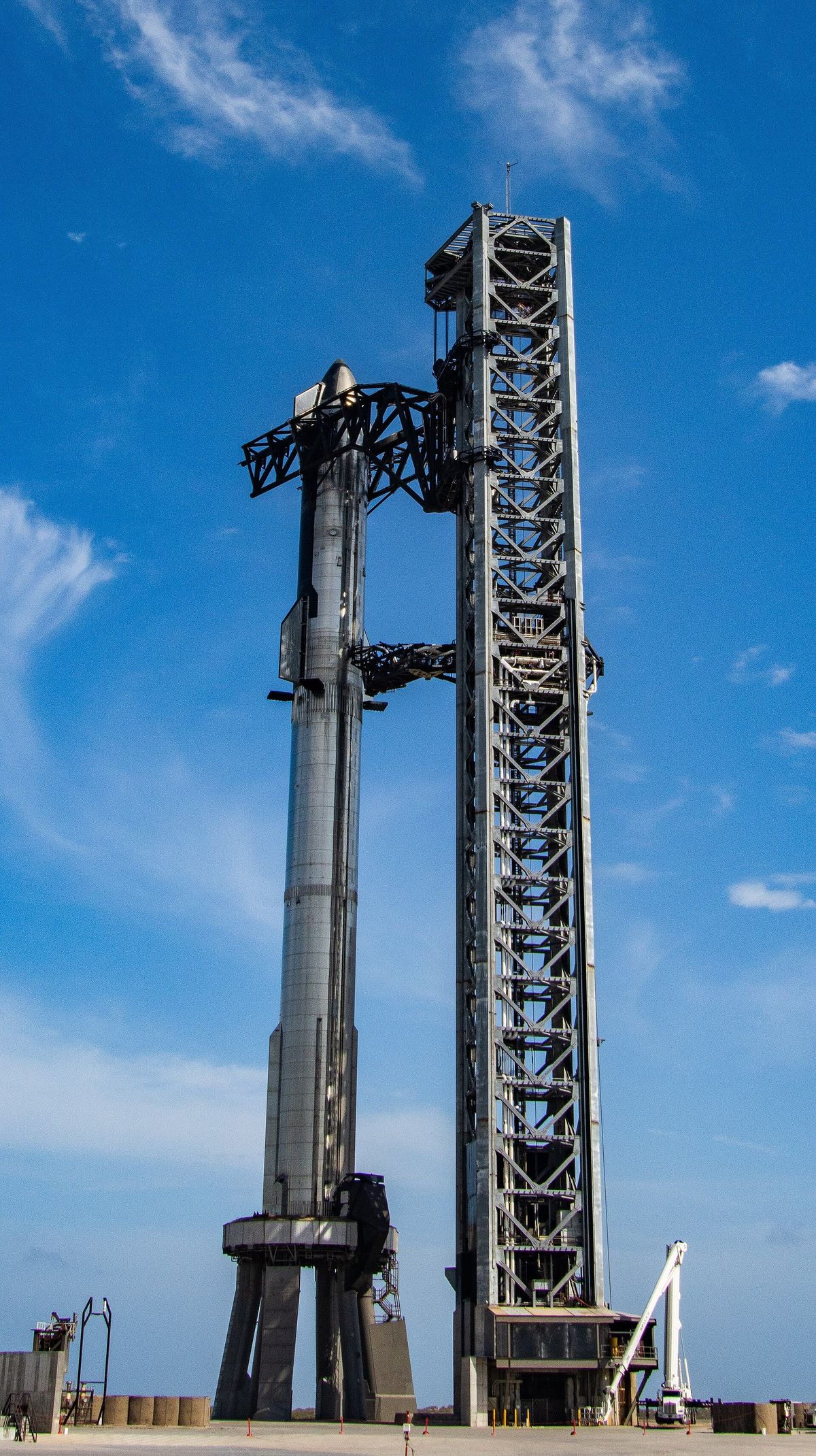
SpaceX achieved another major milestone Saturday when its Starship spacecraft returned from space and was caught by the mechanical arms of its Texas launch tower for the first time.
The 171-foot-tall Starship descended toward SpaceX's Starbase facility after a roughly 22-hour orbital mission, then maneuvered between the enormous arms of the launch structure known as "Mechazilla."
Cheers erupted inside SpaceX facilities as the vehicle settled into the tower's arms. "Starship has been caught," the company announced.
A First For The Upper Stage
SpaceX had previously demonstrated the technique with Starship's Super Heavy booster, but catching the upper-stage spacecraft was a more difficult step toward making the entire launch system rapidly reusable.
READ MORE: FAA Lifts Nationwide Ground Stop After Hours-Long Telecom Failure
SpaceX founder Elon Musk celebrated on X, writing that "rapid reusability is the holy grail of rocketry."
"Mechazilla catches Starship! Congratulations to the entire SpaceX team on this incredible achievement!" SpaceX posted.
Nearly A Day In Orbit
The flight was Starship's 15th integrated test and one of the most ambitious in the program's history. Starship launched Friday from Starbase in South Texas atop its Super Heavy booster.
After separating from Starship, the booster returned to the launch site and was caught by Mechazilla's arms, while Starship continued into orbit.
Rather than coming back after about an hour as on previous test flights, the spacecraft stayed in space for nearly a full day, allowing SpaceX to test it under conditions closer to those of future operational flights.
Starship completed multiple objectives in orbit, including testing spacecraft systems. It then endured intense heat on its way back through the atmosphere before performing its characteristic "belly flop" descent.
READ MORE: Trump's AI Task Force Meets On Threat Of AI-Powered Cyberattacks Against Critical Infrastructure
Near the ground, Starship reignited its engines, flipped into a vertical position and carefully maneuvered toward the launch tower.
Why Tower Catches Matter
Unlike traditional spacecraft that land with parachutes or landing legs, SpaceX intends both stages of Starship to return directly to their launch infrastructure. Removing landing legs cuts weight, while tower catches could let rockets be quickly inspected, refueled and launched again.
That capability is central to Musk's vision of dramatically lowering the cost of spaceflight.
Starship is the largest and most powerful rocket system ever built. With its Super Heavy booster, it stands about 400 feet tall and produces substantially more thrust at liftoff than NASA's Saturn V rocket from the Apollo program.
NASA also has a major stake in the program. The agency selected a modified version of Starship as the lunar lander for its Artemis program, which aims to return American astronauts to the moon.
Musk has repeatedly said Starship is being designed to carry large numbers of people and huge amounts of cargo to the moon and eventually Mars, plans that depend on rapid reusability. SpaceX has spent years testing the concept through an aggressive development program that has included spectacular successes as well as vehicles lost during testing.
With both stages now caught by the same tower system, SpaceX has moved closer to treating orbital rockets less like disposable launch vehicles and more like reusable aircraft. Each flight has gradually expanded Starship's capabilities, from short atmospheric tests to orbital missions and increasingly sophisticated recovery attempts.